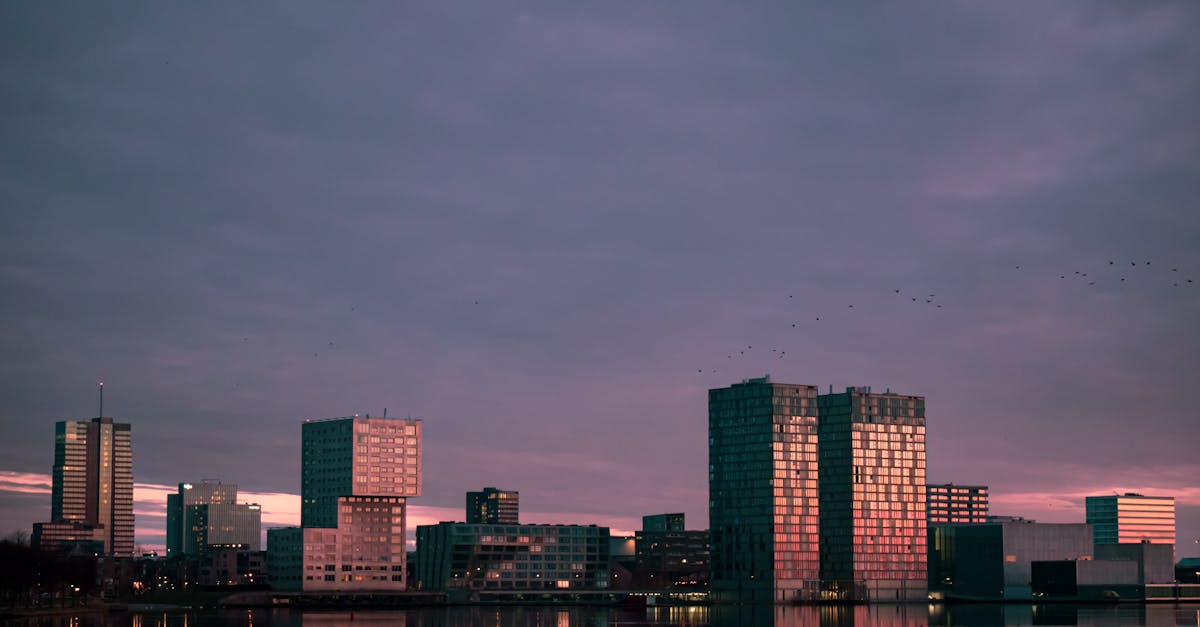
"Lake swim and rolling countryside bike in Almere, Netherlands."
🏊 Swim
Swim in the Gooimeer — a large freshwater lake in Flevoland. Cool water (18-20°C) with minimal current. The polder landscape means flat, wind-exposed conditions. A unique Dutch experience.
🚴 Bike
The flattest full-distance bike course in the world. Virtually zero climbing across 180km through the Dutch polders. The only challenge is wind — the exposed flat terrain funnels crosswinds that can be brutal. Cycling paradise road surfaces.
🏃 Run
Flat marathon through Almere's parks and cycling paths. Well-organized Dutch course with plenty of aid stations. The flat terrain and good crowd support make for consistent pacing.
Transition Details
T1/T2 are in the same location · Surface: pavement
Weather
Typical: 16°C, 65% humidity.
Registration
https://example.com/challenge-almere
The Story
The first thing you need to understand about Challenge Almere is that it is flat. The second thing you need to understand is that flat does not mean what you think it means.
The race has been held since 1983, making it one of the oldest full-distance triathlons in Europe — older than Ironman Frankfurt, older than Ironman Lanzarote, older than most races that now consider themselves classics. It was originally called the Holland Triathlon, and for decades it was the only place in the Netherlands where you could race 3.8 kilometres of swimming, 180 kilometres of cycling, and 42.2 kilometres of running in a single day. It carried that responsibility with a peculiarly Dutch combination of efficiency and understatement.
The course sits in Flevoland, a province that did not exist until the 1950s. It was reclaimed from the Zuiderzee — literally built by draining a shallow sea and turning the seabed into farmland. The land here is below sea level, held dry by an intricate system of dikes, pumps, and canals. There are no hills because there was no geology to create them. The horizon is ruler-straight in every direction. The highest point on the bike course is a highway overpass.
This flatness is the great deception. Athletes from mountainous countries look at the elevation profile — under 100 metres of total gain across the entire 226-kilometre course — and assume Almere is a recovery race, a personal-best course, a place where the distance does the work and the terrain stays out of the way. They are wrong.
The Dutch wind is the course.
The Flevopolder is an open plain between two bodies of water — the Markermeer to the west and the Gooimeer to the east. There are no forests, no buildings, no hedgerows to break the wind. The landscape is agricultural — wheat, rapeseed, sugar beet — planted in enormous fields separated by drainage canals. When the wind blows across these fields, which it does on virtually every race day in recorded history, there is nothing to slow it down. It arrives at full strength and it stays.
On a moderate day, athletes face 25 to 30 km/h sustained winds with gusts above 40. On a bad day — and Almere has had spectacularly bad days — gusts exceed 60 km/h. The polder acts as a wind tunnel, funnelling and accelerating the air across kilometres of flat, exposed terrain. Crosswinds push you sideways. Headwinds feel like riding into a wall of invisible resistance. And because the course is flat, there are no descents to recover on, no sheltered valleys to hide in. The wind is constant, omnipresent, and demoralizing in a way that a mountain climb is not. A climb has a summit. Wind has no summit.
The swim takes place in the Gooimeer — a large freshwater lake that can develop significant chop on windy days. Water temperature sits around 17-19°C, cool enough for wetsuits most years. The lake swim is honest and unspectacular — a rectangle out, across, and back — but the chop on a windy day can turn it into a washing machine.
The run is a marathon through Almere's parks and cycling paths, flat as a billiard table, with aid stations every few kilometres and Dutch spectators who understand endurance sport at a cellular level. The Netherlands is a cycling nation, a speed-skating nation, a nation that knows what it means to suffer into wind. The spectators at Almere don't cheer louder when you speed up — they cheer when they see you leaning into a headwind and refusing to slow down. They know exactly what that costs.
Challenge Almere is not glamorous. It doesn't have Kona's mythology or Roth's festival atmosphere or Nice's Mediterranean beauty. What it has is the purest expression of a simple truth: endurance is not about conquering terrain. It is about persisting when the world pushes back. In Almere, the world pushes back with wind, and it pushes back for 226 kilometres, and when you finish you have not climbed a mountain or crossed a desert or swum an ocean. You have simply refused to stop on the flattest, most featureless, most relentlessly exposed course in the sport. That refusal is its own kind of heroism.
"I've raced Lanzarote and Kona. Almere was harder. You cannot hide from the wind. There is nowhere to hide."
"Flat is easy — that's the biggest lie in triathlon. Come to Almere on a windy day and tell me it's easy."
"In the Netherlands we don't complain about wind. It is always there. You learn to work with it or you learn to stay home."
What It Feels Like
Challenge Almere is a triathlon stripped to its essence: you against distance, with wind as the only variable. There are no dramatic vistas, no iconic climbs, no Instagram moments. There is just flat land and moving air and your refusal to stop moving through it. The athletes who love this race — and many love it deeply — understand something fundamental about endurance: the hardest courses are not always the ones with the most elevation. Sometimes the hardest thing is to keep going when there is nothing to push against except the invisible.
🏊 The Swim
The Gooimeer is a lake that reflects the sky — grey on grey days, blue on rare sunny ones, always vast and flat and featureless as the land around it. You swim a rectangular course marked by large orange buoys, the water around 18°C, cool enough to tighten your chest on entry. On calm days, the swim is meditative — smooth water, easy sighting, no current. On windy days, the lake transforms. Chop builds from the west, short steep waves that slam your breathing rhythm and push you off course. Either way, the swim is the least of your worries. The bike is coming.
🚴 The Bike
One hundred and eighty kilometres across the Dutch polders, and your altimeter never twitches. The road surface is immaculate — the Netherlands maintains its cycling infrastructure obsessively — and the terrain offers zero technical challenge. No hills, no sharp corners, no rough patches. Just road, and wind, and more road. The wind arrives in the first ten kilometres and never leaves. Headwind sections feel like climbing a gradient that exists only in the air. Crosswind sections require constant correction, your body angled into the gust, your disc wheel catching every shift. There is no summit to crest, no descent to recover on. The effort is constant, the scenery unchanging — flat fields, drainage canals, the distant silhouette of a wind turbine turning in the same wind that is grinding you down. It is a 180-kilometre lesson in aerodynamic suffering.
🏃 The Run
A flat marathon through Almere's parks and paths. By this point, the wind has been your companion for seven hours and the sound of it — the constant low roar across the polder — has become your internal soundtrack. The run course is sheltered in places by trees and buildings, a relief so profound it feels like entering a warm room. Your legs are fatigued but intact — flat cycling doesn't destroy quads the way climbing does. The challenge is mental: the flatness that should help you actually robs you of landmarks, of variety, of the psychological boost that comes from cresting a hill. You just run, and run, and the finish line approaches at the same steady pace you're moving.
Legendary Moments
The Holland Triathlon Is Born
The first edition of what will become Challenge Almere takes place in Almere-Haven, making it one of the earliest full-distance triathlons in Europe. The field is small, the organization is improvised, and the wind — as it will be every year thereafter — is merciless.
The Great Storm Race
Wind gusts exceed 60 km/h on the bike course. Athletes are literally blown off their bikes on exposed polder sections. The swim is shortened. The DNF rate exceeds 40%. Those who finish tell stories for decades. The race earns its reputation as Europe's toughest flat course.
Rebranding to Challenge
The Holland Triathlon joins the Challenge Family, becoming Challenge Almere-Amsterdam. The rebranding brings international attention to a race that had been a beloved Dutch secret for nearly three decades. International entries increase 300% within two years.
The Perfect-Conditions Year
For the first time in recent memory, race day brings almost no wind. Course records tumble across every age group. Athletes who've raced Almere before are stunned — this is what the course feels like without resistance. It feels like cheating. The regulars secretly miss the wind.
💡 Insider Tips
- → Aerodynamics matter more here than on any other course. A deep-section front wheel and disc rear, a low position, tight-fitting kit — every watt you save from drag is a watt you keep. Time trial helmets pay for themselves in Almere.
- → Train in wind. Seek out exposed flat routes on windy days and practice riding at steady power regardless of ground speed. The mental challenge of seeing 25 km/h on your computer while holding 250 watts is Almere's signature suffering.
- → Bring a round front wheel as a backup. If race-day gusts exceed 50 km/h, a deep-section front wheel becomes genuinely dangerous in crosswinds. Many experienced athletes switch at the last minute based on morning wind reports.
- → Eat and drink consistently on the bike. The flat effort doesn't produce the hunger spikes that climbing does, which means athletes often under-fuel. Set a timer — every 15 minutes, eat or drink. The wind-induced calorie burn is higher than it feels.
- → On the run, use other athletes as windbreaks where drafting rules allow. A group of three runners in a headwind section saves measurable energy compared to running alone. This is not drafting — it is survival.
- → Check the weather forecast obsessively in race week. Wind direction and speed determine your pacing strategy entirely. A 30 km/h north wind means the first 90km of the bike is a tailwind and the return is hell — plan your power output accordingly.
Fun Facts
- ▸ Challenge Almere (formerly Holland Triathlon) has been running since 1983 — one of the oldest full-distance triathlons in Europe.
- ▸ The course is so flat that the total elevation gain for the entire race (swim, bike, run) is under 100m.
- ▸ Dutch wind is the great equalizer — flat doesn't mean easy when you're battling 30km/h headwinds for 90km.
Prepare for This Race
More Races in Netherlands
FAQ
What distance is the Challenge Almere? +
The Challenge Almere is a Ironman (Full Distance) distance triathlon: 3800m swim, 180km bike, and 42.2km run (226km total) in Almere, Netherlands.
When is the Challenge Almere? +
The next edition is on September 8, 2026. The race is typically held in September.
Water temperature and wetsuit rules? +
Lake water at 17°C average. Wetsuit rules are conditional.
How hilly is the bike course? +
200m of climbing over 180km. Profile: flat. Drafting not allowed.
What's the weather like on race day? +
8–22°C, 65% humidity, 26% rain chance, 8 km/h winds.
Average finish time? +
Approximately 12h. Varies with conditions and athlete experience.
Are you the race organizer?
Claim This RaceFree · Get featured on our homepage · Edit your race details