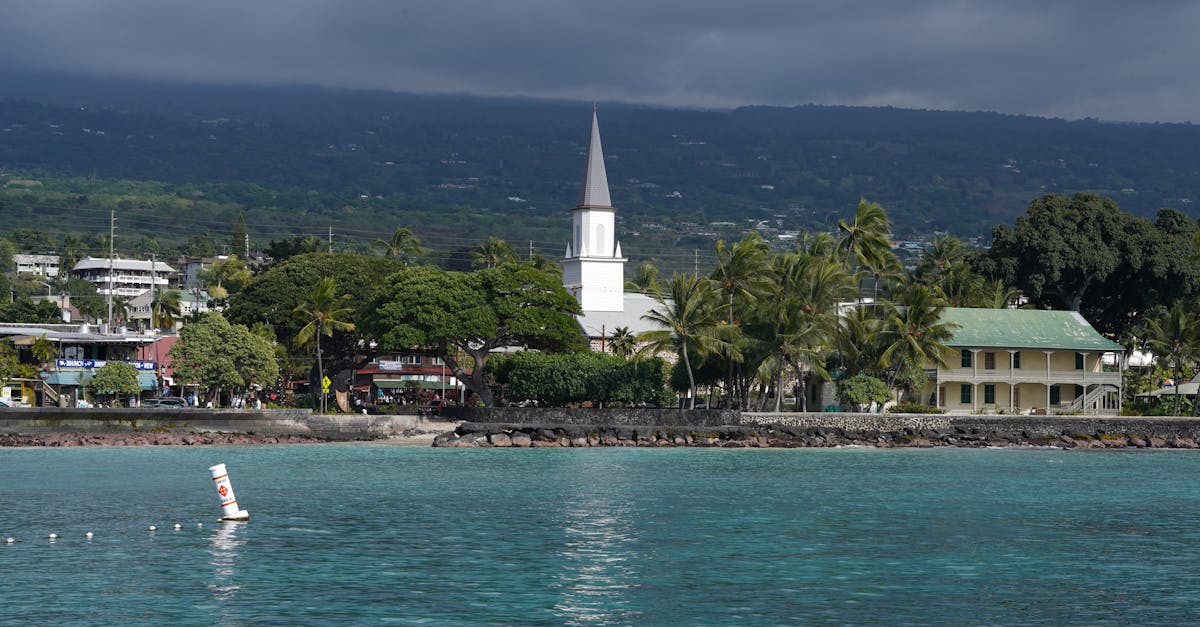
"The Ironman World Championship — where legends are made on the lava fields of Hawaii."
🏊 Swim
Iconic Kailua Bay swim in the warm Pacific — a rectangular course with a deep-water start. Crystal-clear visibility, potential for swells and strong currents. The water temperature hovers around 26°C, often wetsuit-illegal. 2,000+ athletes create a chaotic mass start.
🚴 Bike
The legendary Queen Kaahumanu Highway — 180km of exposed lava fields between Kailua-Kona and Hawi. Relentless crosswinds hit you on the Queen K, with gusts up to 60 km/h through the lava fields. Minimal shade. The turnaround at Hawi sits atop a 500m climb that rewards you with a fast descent back to the coast.
🏃 Run
The marathon on the Queen K and Ali'i Drive. Starts in Kona town, heads north along the highway through the infamous Natural Energy Lab (a dark, windless furnace), and returns to Ali'i Drive for the famous finish on the pier. Heat, humidity, and lava radiation push temperatures to 35°C+.
Transition Details
T1/T2 are in different locations · Surface: gravel
Weather
Hot tropical conditions: 30°C+ with high humidity and relentless trade winds. The lava fields radiate heat, pushing perceived temperature above 35°C on the run.
Registration
https://www.example.com/ironman-kona
The Story
The Ironman World Championship didn't start as the pinnacle of endurance sport. It started as a bar bet. In February 1978, at the awards ceremony for the Oahu Perimeter Relay, US Navy Commander John Collins stood up and proposed combining three existing Honolulu races — the 2.4-mile Waikiki Rough Water Swim, the 112-mile Around-Oahu Bike Race, and the Honolulu Marathon — into a single event to settle the debate of who was fittest: swimmers, cyclists, or runners.
Fifteen people showed up. Twelve finished. Gordon Haller won in 11 hours, 46 minutes. Nobody knew they were creating a religion.
By 1982, the race had moved to the Big Island of Hawaii — to Kailua-Kona, where the lava fields, the trade winds, and the merciless heat would forge the event's identity. ABC's Wide World of Sports began broadcasting. Julie Moss's legendary 1982 crawl to the finish line — collapsing within sight of the line while Kathleen McCartney passed her for the win — became one of the most replayed moments in sports television and ignited worldwide interest in the event.
The Queen Kaahumanu Highway became triathlon's most sacred ground. A straight ribbon of black asphalt through ancient lava fields, exposed to relentless crosswinds and heat radiating off the volcanic rock. There is no shade. There is no mercy. The highway doesn't care how fit you are. It cares how prepared you are to suffer.
Kona is where the sport's greatest dramas have played out. Mark Allen's Iron War with Dave Scott in 1989 — side by side for 130 miles until Allen broke away on the marathon. Chrissie Wellington's four consecutive victories. Jan Frodeno's course record. The thousands of age-groupers who spend years qualifying, who reorganize their entire lives around a slot at the Big Dance.
Getting to Kona is a year-round obsession for thousands of triathletes worldwide. The qualification system — earning a slot through age-group placement at any Ironman race, then waiting through the rolldown ceremony hoping someone declines — has created its own subculture. Forums analyzing rolldown times at specific races. Spreadsheets tracking slot allocations. Athletes strategically choosing which Ironman to race based on their age group's competitiveness at that event.
And then, when you finally get there, you discover that Kona itself is both more and less than you imagined. More brutal — the heat, the wind, the lava fields are not abstract concepts on a race page but physical forces trying to break you. And less intimidating — because on the pier at Kailua Bay the morning of the race, surrounded by 2,000 other athletes who all sacrificed the same way you did, the fear transforms into something else entirely. Something like belonging.
"Kona doesn't build character. It reveals it."
"I crawled. I crawled because I had to finish. There was no option."
"The moment you think you've mastered Kona, it humbles you."
"The lava fields don't care about your FTP or your training volume. They care about what's between your ears."
What It Feels Like
Kona is not the hardest Ironman course — Lanzarote has more climbing, Nice has a harder bike. But Kona is the most psychologically demanding race in triathlon. The combination of heat, wind, isolation on the Queen K, and the sheer weight of the event's history creates a pressure that breaks athletes who are physically capable of finishing. The athletes who thrive at Kona are the ones who've rehearsed suffering, who've trained their minds as diligently as their bodies, and who understand that the race doesn't start until mile 18 of the marathon.
🏊 The Swim
The Kailua Bay swim is deceptively calm on good days — warm, clear, tropical water that lulls you into thinking this will be the easy part. On bad days, the ocean reminds you it's the Pacific. Swells, currents, and 2,000 bodies churning the water into a washing machine. The deep-water start means no ground beneath your feet. You're swimming in the open ocean, and the only thing between you and the rest of the Pacific is a line of kayakers. The exit at the Kailua Pier is a scramble up the boat ramp — already your legs feel different than they did in training.
🚴 The Bike
The Queen K is a 112-mile meditation on suffering. You leave Kona town and within minutes you're on the highway — flat, straight, and merciless. The lava fields absorb the sun and radiate it back at you from below. The Mumuku crosswinds hit you from the left, sometimes gusting to 60 km/h, turning your deep-section wheels into sails. You climb to Hawi at the turnaround, and the headwind that punished you on the way up becomes a tailwind that gives you false confidence on the way back. The false confidence is the trap. Athletes who ride too hard on the return — drunk on the tailwind speed — pay for it on Ali'i Drive.
🏃 The Run
The marathon begins in Kona town with crowd support that makes you feel invincible. It won't last. The out-and-back to the Natural Energy Lab is where Kona breaks people. The NE Lab road is black, windless, and radiates heat like an oven. Your pace drops. Your brain starts negotiating — walk the aid stations, just get to the turnaround, one more mile. The return to Ali'i Drive feels impossibly long. And then the crowds reappear, and the finish line on the pier appears, and every step of the last mile is carried by something that isn't fitness. It's the accumulated weight of everything you sacrificed to get here.
Legendary Moments
The Beginning
Fifteen athletes line up for the first Ironman. Gordon Haller wins in 11:46:58. A sport is born from a bar bet.
Julie Moss Crawls to the Line
Leading the women's race, Julie Moss collapses 20 yards from the finish. She crawls across on hands and knees while Kathleen McCartney passes her for the win. ABC broadcasts the footage. The world takes notice.
The Iron War
Mark Allen and Dave Scott — the two greatest Ironman athletes — race side by side for 130 miles. They run together through the lava fields, matching each other stride for stride. Allen finally breaks free at mile 22 of the marathon. Widely considered the greatest race in triathlon history.
Sian Welch and Wendy Ingraham
In the final stretch of Ali'i Drive, Welch and Ingraham collapse repeatedly, crawling toward the finish in a scene that mirrors Julie Moss fifteen years earlier. Both finish. The footage becomes iconic.
Frodeno's Record
Jan Frodeno shatters the Kona course record with 7:52:39, a time so fast it redefines what's possible on the Big Island. He leads wire-to-wire in one of the most dominant performances in championship history.
The Last Pre-Pandemic Kona
Jan Frodeno wins his third Kona title. Anne Haug becomes the first German woman to win. The field is the deepest in history. Nobody knows it'll be the last 'normal' Kona for years.
💡 Insider Tips
- → Heat acclimatization is non-negotiable. Spend 10-14 days training in heat before the race, or use sauna protocols (20-30 min post-workout, 5x/week for 2 weeks).
- → Arrive at least 5 days early. Jet lag plus race-day heat equals disaster. Swim the bay, ride the Queen K, run Ali'i Drive — the course has secrets you can only learn by previewing it.
- → The Mumuku winds are strongest in the afternoon. If you're a slower athlete, you'll face the worst winds on the bike. Practice riding in crosswinds with your race wheels. Many experienced Kona athletes use shallower wheels (50mm or less) despite the aero penalty.
- → Nutrition is your fourth discipline and at Kona it's your first. The heat increases your caloric burn and fluid loss. Practice 60-90g carbs/hour on the bike and increase sodium intake significantly. If you bonk at Kona, it's because you under-fuelled, not because you under-trained.
- → The Natural Energy Lab is a furnace. Pour ice water over your head at every aid station. Walk the aid stations. Take cola. The 30 seconds you 'lose' walking saves you 10 minutes of suffering later.
- → Race your own race. The energy on the pier before the start will make you want to swim faster than you should. The tailwind on the Queen K return will make you want to bike faster than you should. The crowds on Ali'i will make you want to run faster than you should. Resist all three.
Fun Facts
- ▸ The Ironman World Championship started in 1978 when US Navy Commander John Collins challenged 15 athletes to combine Waikiki Rough Water Swim, Around-Oahu Bike Race, and Honolulu Marathon into one event.
- ▸ The iconic call 'You are an Ironman!' was first used by race announcer Mike Reilly.
- ▸ The course record is held by Patrick Lange (7:52:39, 2018) and Daniela Ryf (8:26:16, 2018).
- ▸ The Natural Energy Lab section of the run is considered the hardest stretch in triathlon — zero wind, pitch dark road surface, and 35°C+ temperatures.
- ▸ Kona's qualifying system means only the top age-group finishers from Ironman races worldwide earn a slot.
Prepare for This Race
More Races in United States
San Francisco · 52km · olympic
Chicago · 52km · olympic
New York · 52km · olympic
New York · 52km · olympic
New York · 51.5km · olympic
Los Angeles · 51.5km · olympic
FAQ
What distance is the Ironman World Championship Kona? +
The Ironman World Championship Kona is a Ironman (Full Distance) distance triathlon: 3800m swim, 180km bike, and 42.2km run (226km total) in Kailua-Kona, United States.
When is the Ironman World Championship Kona? +
Typically held in October on a Saturday.
Water temperature and wetsuit rules? +
Ocean water at 26°C average. Wetsuits are not allowed.
How hilly is the bike course? +
1800m of climbing over 180km. Profile: hilly. Drafting not allowed.
What's the weather like on race day? +
24–34°C, 65% humidity, 7% rain chance, 30 km/h winds.
Average finish time? +
Approximately 11h 30m. Varies with conditions and athlete experience.
Are you the race organizer?
Claim This RaceFree · Get featured on our homepage · Edit your race details