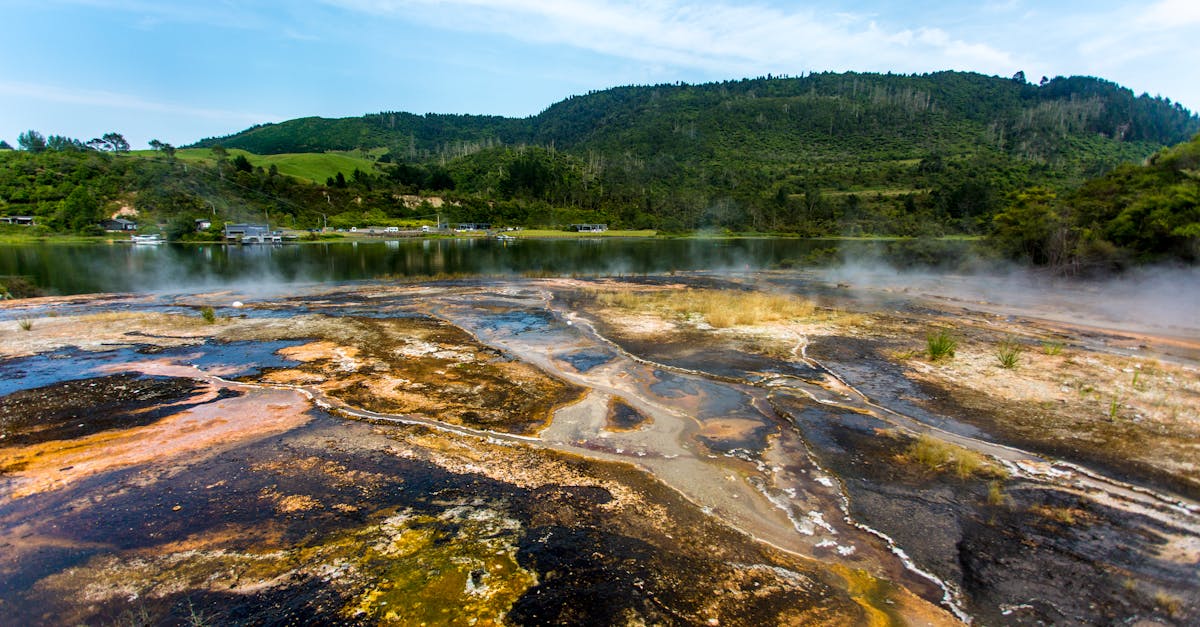
"One of the longest-running Ironman events outside Hawaii, since 1985."
🏊 Swim
Lake Taupo swim — crystal-clear volcanic lake
🚴 Bike
Rolling course through volcanic North Island landscape
🏃 Run
Run along the shores of Lake Taupo
Transition Details
T1/T2 are in the same location · Surface: grass
Weather
Typical race-day conditions: 20°C with 55% humidity.
Registration
https://www.example.com/ironman-new-zealand
The Story
Lake Taupo is a hole in the earth where a mountain used to be. The largest lake in New Zealand — 616 square kilometres of crystal-clear water — fills a volcanic caldera formed by an eruption so massive it altered global climate patterns. The Oruanui eruption, 26,500 years ago, ejected 1,170 cubic kilometres of material and left behind a depression that filled with rain, snowmelt, and geothermal water. Today, the lake is serene, turquoise, and surrounded by forests, farmland, and the distant volcanic cones of Tongariro National Park. It is, by any measure, one of the most extraordinary bodies of water on the planet.
Since 1985, this is where New Zealand has hosted its Ironman. The race is one of the oldest in the world outside Hawaii — a full four decades of athletes swimming in volcanic water, riding through the Waikato countryside, and running along a lakeshore that puts every other Ironman setting to shame. When the race started, Ironman was still a fringe pursuit. Taupo has grown with the sport, its identity inseparable from the event that brings 1,650 athletes and their families to the small lakeside town every March.
The swim begins where geology meets sport. At 19°C, the volcanic lake water is cool but manageable — wetsuits are almost always legal, and the calm, currentless conditions make for a swim that favours technique over survival. The clarity of the water is startling; you can see metres below the surface, a reminder that you're swimming in water filtered through volcanic rock. The single-lap course stays close to shore, the mountain views visible at every sighting breath. The average swim split of 1:04 reflects a swim that is honest — not fast, not slow, just a pure test of how well you move through water.
The bike is where Taupo shows its teeth. 180 kilometres through the North Island's volcanic landscape with 1,400 metres of climbing — this is not a flat course. The rolling terrain of the Waikato countryside sends you up and over hills that are individually modest but collectively relentless. The road surfaces are good but narrow in places, and the New Zealand countryside has a wildness that European and American Ironman courses lack — farmland gives way to native bush, geothermal steam vents appear beside the road, and the distant volcanic skyline is a constant reminder that you're riding across an active geological landscape. Average wind of just 8 km/h is a blessing — the hills are challenge enough.
The run is a lakeside affair that capitalises on Taupo's greatest asset: the view. The out-and-back course follows the lakeshore, the volcanic peaks of Ruapehu, Ngauruhoe, and Tongariro floating above the far shore like a postcard that nobody would believe. The 200 metres of rolling elevation adds texture to the marathon without creating any sustained climb. The crowd support in Taupo is characteristically Kiwi — passionate, personal, slightly irreverent. Signs with inside jokes. Neighbours ringing bells from their front gardens. Kids holding out lollies. The average run split of 4:50 reflects a course that is beautiful enough to distract you from your suffering.
With 1,500 finishers from 75 countries, Ironman New Zealand punches well above the weight of its field size. The 46% international participation rate means nearly half the field has traveled to the bottom of the world for this race, and the March timing — late New Zealand summer — slots perfectly into the northern hemisphere's off-season. Athletes from Europe and North America use Taupo as their first race of the season, arriving in the New Zealand autumn as their home countries thaw.
Forty years of racing has given Ironman New Zealand an institutional memory that newer races can't replicate. The volunteers who've been working the same aid station for two decades. The course marshals who know every pothole. The post-race hangi — a traditional Māori earth oven feast — that connects the event to the culture of the land it takes place on. Taupo is not just a race. It's a pilgrimage to a place where the earth itself reminds you that human endurance, however impressive, is a small thing in a very old landscape.
"You swim in a volcano. You ride past geysers. You run with mountains that are still alive watching you. Taupo doesn't just host a race — it provides a landscape that makes the suffering feel sacred."
"I've raced on five continents. Taupo is the most beautiful course in the world. It's not close."
"The Kiwis don't just spectate — they participate. Every aid station feels like a party being thrown specifically for you."
What It Feels Like
Ironman New Zealand is the beautiful hard race. The swim is gentle. The bike is genuinely challenging at 1,400m of elevation. The run is scenic and rolling. The combination creates a race that demands complete preparation — you can't hide poor bike fitness on the flats, because there are no flats. The 5% DNF rate and 11:48 average finish time reflect a course that is achievable but honest. Athletes who come here for the scenery discover the challenge. Athletes who come here for the challenge discover the scenery.
🏊 The Swim
Swimming in a volcanic caldera lake is an experience that transcends sport. The water at 19°C is cool but not cold, clear enough to see the volcanic rock beneath you, and calm enough that sighting is almost unnecessary. The single-lap course hugs the lakeshore, the mountain panorama visible at every breath. There is a stillness to the Taupo swim that other race locations can't replicate — no currents, no waves, no marine traffic. Just you and 3,800 metres of water that has been sitting in a volcanic crater since before human civilisation existed.
🚴 The Bike
The 1,400 metres of climbing through the Waikato countryside is the real Ironman New Zealand. The hills are not dramatic — no Alpine switchbacks, no 15% walls — but they are persistent. Rolling terrain that goes up-and-over every few kilometres, through farmland and native bush, past geothermal vents and volcanic rock formations. The road surfaces are good but occasionally narrow, and the 8 km/h average wind is gentle by Ironman standards. The psychological challenge is managing effort across 180 kilometres of constant undulation without ever having a sustained flat section to recover on.
🏃 The Run
The lakeside out-and-back is the reward for surviving the bike. The volcanic peaks of Tongariro National Park hover above the far shore — Ruapehu, Ngauruhoe, Tongariro — creating a backdrop so dramatic it almost distracts from the effort of running a marathon. The 200 metres of rolling elevation adds gentle variety without creating any serious climbing. The Taupo crowd lines the lakeshore with a warmth and humour that is distinctly New Zealand — encouraging without being frantic, personal in a way that big-city races can't match.
Legendary Moments
The Southern Hemisphere Pioneer
Ironman New Zealand launches in Taupo, becoming one of the first Ironman events outside the United States. The volcanic lake and mountain scenery immediately distinguish it as one of the most spectacular courses in the sport.
Cameron Brown's Dynasty Begins
New Zealand's Cameron Brown wins the first of his record twelve Ironman New Zealand titles — a streak of domestic dominance that spans two decades and makes him the most successful athlete in any single Ironman event's history.
25 Years of Taupo
The race celebrates a quarter century with its most international field to date. Athletes from over 50 countries gather on the lakeside, and the post-race hangi feast draws nearly as many participants as the race itself.
75 Nations at the Volcano
A record 75 countries are represented among 1,650 entrants, making Ironman New Zealand one of the most internationally diverse races per capita in the Ironman system. The volcanic lake continues to draw athletes from every continent.
💡 Insider Tips
- → The 1,400m of bike climbing is real. If you train on flat terrain, supplement with specific hill work — not steep intervals, but sustained rides with constant 2-4% rollers that mimic the Waikato countryside. Power-to-weight matters here more than on flat courses.
- → March in the southern hemisphere is late summer — expect 20-25°C with moderate UV. New Zealand's ozone layer is thinner than northern hemisphere equivalents. Sunscreen application must be aggressive — SPF 50+, reapplied at every aid station, including the back of your neck and ears.
- → The volcanic lake water is exceptionally clear. This sounds pleasant but can be disorienting — depth perception changes when you can see the bottom. Practice open-water swimming in clear-water conditions if possible.
- → Taupo is a small town that fills up during Ironman week. Book accommodation early and within walking distance of the transition area. The town has excellent cafés and restaurants but limited capacity — dinner reservations for race week should be made well in advance.
- → The bike course's constant undulation rewards a steady-state effort strategy. Don't surge on the uphills and coast the downhills — maintain consistent power output and let the terrain dictate your speed rather than the other way around.
- → If you're traveling from the northern hemisphere, arrive at least a week early. The combination of jet lag (12+ hours offset for Europeans), hemispheric season change, and the physical demands of race day means acclimatisation is essential. Use the extra days to swim in the lake and preview the bike course.
Fun Facts
- ▸ One of the longest-running Ironman events outside Hawaii, since 1985.
- ▸ Lake Taupo is the largest lake in New Zealand, formed by a volcanic eruption.
Prepare for This Race
More Races in New Zealand
Queenstown · 51.5km · olympic
Christchurch · 51.5km · olympic
Wellington · 113km · half-ironman
Wellington · 51.5km · olympic
Tauranga · 51.5km · olympic
Auckland · 51.5km · olympic
FAQ
What distance is the Ironman New Zealand? +
The Ironman New Zealand is a Ironman (Full Distance) distance triathlon: 3800m swim, 180km bike, and 42.2km run (226km total) in Taupo, New Zealand.
When is the Ironman New Zealand? +
The next edition is on March 1, 2026. The race is typically held in March.
Water temperature and wetsuit rules? +
Lake water at 19°C average. Wetsuit rules are conditional — forbidden above 24.5°C.
How hilly is the bike course? +
1400m of climbing over 180km. Profile: hilly. Drafting not allowed.
What's the weather like on race day? +
16–25°C, 55% humidity, 26% rain chance, 8 km/h winds.
Average finish time? +
Approximately 11h 48m. Varies with conditions and athlete experience.
Are you the race organizer?
Claim This RaceFree · Get featured on our homepage · Edit your race details