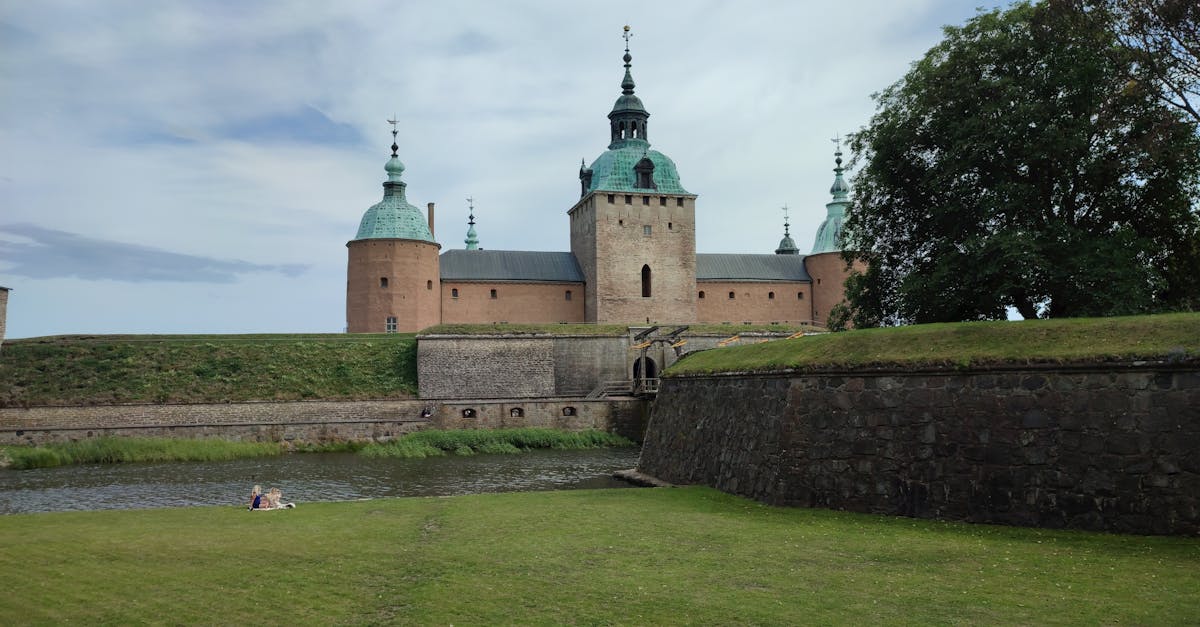
"Cold-water ocean swim and flat bike course in the rugged beauty of Kalmar."
🏊 Swim
Ocean swim in Kalmar
🚴 Bike
Flat and fast bike course through Kalmar region
🏃 Run
Run course through Kalmar
Transition Details
T1/T2 are in the same location · Surface: gravel
Weather
Typical race-day conditions: 13°C with 38% humidity.
Registration
https://www.example.com/ironman-sweden
The Story
Kalmar is not where you'd expect to find one of the fastest Ironman courses in the world. The small Swedish city on the Baltic coast — population 40,000, known mostly for its medieval castle and its proximity to the island of Öland — seems an unlikely candidate for triathlon royalty. But since 2012, Ironman Sweden has quietly built a reputation as the course where personal bests go to be set, where first-timers discover they're faster than they thought, and where the long Scandinavian summer light turns the final hours of racing into something approaching magic.
The swim sets the terms. The Baltic Sea off Kalmar is cold — 13°C on an average race day, sometimes colder. Wetsuits are not just allowed but essential. The water is less saline than the open ocean, which means less buoyancy; combined with the temperature, the swim is a test of acclimatization and nerve. But the Baltic here is sheltered by the island of Öland across the strait, and conditions are typically calmer than the temperature suggests. Athletes emerge from the water with flushed faces and tingling hands, the cold already a memory being replaced by the warmth of a Swedish August morning.
The bike course is where Kalmar earns its reputation. 180 kilometres through the Småland countryside on a loop course so flat that 300 metres of total elevation gain is generous rounding. The roads are the Swedish standard — well-maintained, wide-shouldered, and largely traffic-free on race day. The landscape is pastoral in the Scandinavian way: birch forests, yellow rapeseed fields, red-painted farmhouses. Average wind of 18 km/h provides variety without brutality. This is a course built for speed, and the average bike split reflects it — athletes routinely post times that would be exceptional on any other Ironman course.
The run unfolds through Kalmar on a two-lap loop with gentle rolling — 100 metres of gain, just enough to remind your legs they exist. The course passes the castle, follows the waterfront, and winds through the town centre where the crowd support is disproportionate to the city's size. Swedes come out in force for their Ironman, and the atmosphere along the run course has a distinctly Scandinavian character: enthusiastic but not frantic, supportive without being overwhelming, the kind of encouragement that sustains without exhausting.
What nobody tells you about Ironman Sweden is the light. In August, Kalmar sits at 56 degrees north latitude, and the sun doesn't set until well past nine. The athletes finishing in the 11- to 14-hour range are running in golden late-afternoon and soft evening light, the sky cycling through shades of amber and rose that make every photograph look filtered. The midnight finish — for those pushing the 17-hour cutoff — happens in a twilight that never quite becomes dark. It gives the race an ethereal quality, as if the day itself is reluctant to end.
The average finish time of 11 hours and 30 minutes makes Ironman Sweden statistically one of the fastest full-distance races on the global calendar. The 29% female participation rate is among the highest in Ironman racing, and the field — nearly 2,800 finishers from 29 countries — suggests a race that has found its audience: serious athletes who want a fast time, in a setting that makes the suffering feel almost gentle. Kalmar has no interest in breaking you. It simply offers the conditions for you to discover how fast you can go.
"I came for a fast time. I stayed for the light. Racing at ten in the evening under a sky that refuses to go dark — it changes how you feel about the marathon."
"Kalmar is the honest course. No tricks, no hidden climbs, no cruel heat. Just you and your fitness on perfect roads."
"The cold swim wakes you up in a way that coffee never could. By T1 you feel like you could ride forever."
What It Feels Like
Ironman Sweden is the great equalizer in the opposite direction: where Lanzarote strips away everything except grit, Kalmar strips away everything except fitness. There is no course-specific challenge to master, no wind to outwit, no heat to survive. The flat terrain and cool conditions create a pure test of your training. Your finish time here is the closest thing to an unfiltered measure of your Ironman capability.
🏊 The Swim
The Baltic at 13°C is a cold-water swim by any standard, and the reduced salinity means you float lower than in the ocean. Wetsuits are essential, and most athletes double up with neoprene caps. But the sheltered waters of the Kalmar Strait are calm, and the single-lap course is well-marked. The cold sharpens your focus for the first 500 metres, then your body adjusts, and the swim becomes almost meditative. Exiting the water, the transition to a warming August morning is one of the most pleasant contrasts in Ironman racing.
🚴 The Bike
This is a speedway. 300 metres of elevation over 180 kilometres — effectively zero climbing. The Småland countryside rolls by in long, gentle straights through agricultural land, the road surface smooth and forgiving. Average winds of 18 km/h provide just enough resistance to keep things honest without altering your race plan. The danger is going too hard too early. On a course this flat and fast, your power meter can drift upward without you noticing. Discipline here — holding your target watts rather than chasing speed — is the difference between a great bike and a great race.
🏃 The Run
Two laps through Kalmar with 100 metres of rolling terrain — barely perceptible on fresh legs, noticeable enough at kilometre 30 to remind you this is a marathon. The course passes Kalmar Castle, follows the waterfront, and loops through the compact town centre. Crowd support is consistent and warm. The Scandinavian light in August means you're never running in darkness, even on a 14-hour day, and the cooling evening temperatures — dropping toward 8°C — are a welcome change from the bike.
Legendary Moments
Kalmar's First Ironman
The inaugural Ironman Sweden draws a predominantly Scandinavian field to the Baltic coast. Fast conditions on the flat course immediately signal that Kalmar will become a PB destination.
The Sub-Eight
Professional athletes exploit the flat terrain and cool conditions to shatter expectations. The men's course record drops below 8 hours, confirming Kalmar as one of the fastest Ironman courses anywhere in the world.
Peak Participation
Over 3,000 athletes register, with 29 countries represented. The race has grown from a regional Scandinavian event into a destination race for speed-seekers across Europe.
The Midsummer Edition
Ideal conditions — 20°C, light winds, calm seas — produce one of the fastest average finish times in Ironman history. The post-race celebrations in Kalmar's town square carry the unmistakable energy of Swedish midsummer festivity.
💡 Insider Tips
- → Cold-water acclimatisation is critical. The Baltic at 13°C will shock unprepared swimmers. Practice open-water swims below 16°C in the weeks before the race, and bring a neoprene swim cap — it makes a meaningful difference to comfort and core temperature.
- → The flat bike course is a power trap. Set your target wattage before the race and do not exceed it, regardless of how fast you feel in the first hour. Average bike splits under 5:30 are common here — don't chase someone else's split at the cost of your run.
- → Pack warm clothing for T2. Evening temperatures drop to 8-10°C, and if you're running after 7pm, you'll want arm warmers or a light long-sleeve top. The finish area can feel genuinely cold for athletes finishing in 14+ hours.
- → The reduced salinity of the Baltic means you sit lower in the water than in the Mediterranean or the ocean. If you've calibrated your swim stroke in saltwater, expect to feel slightly less buoyant. A few pool sessions focusing on body position help.
- → Kalmar is a small city — accommodation sells out early. Book within walking distance of the race venue as soon as you register. The town is compact enough that you won't need a car during race week.
- → The long daylight is a genuine psychological advantage. Use it. Unlike races where the final hours are in darkness, Kalmar's evening light gives you a visual horizon that keeps the mind engaged. Don't waste this gift by going out too fast and suffering through the most beautiful part of the day.
Prepare for This Race
More Races in Sweden
Jönköping · 113km · half-ironman
Stockholm · 51.5km · olympic
Malmo · 113km · half-ironman
Gothenburg · 113km · half-ironman
Gothenburg · 51.5km · olympic
Malmo · 51.5km · olympic
FAQ
What distance is the Ironman Sweden? +
The Ironman Sweden is a Ironman (Full Distance) distance triathlon: 3800m swim, 180km bike, and 42.2km run (226km total) in Kalmar, Sweden.
When is the Ironman Sweden? +
Typically held in August on a Sunday.
Water temperature and wetsuit rules? +
Ocean water at 13°C average. Wetsuits are allowed.
How hilly is the bike course? +
300m of climbing over 180km. Profile: flat. Drafting not allowed.
What's the weather like on race day? +
8–20°C, 38% humidity, 40% rain chance, 18 km/h winds.
Average finish time? +
Approximately 11h 30m. Varies with conditions and athlete experience.
Are you the race organizer?
Claim This RaceFree · Get featured on our homepage · Edit your race details